









icon-account icon-glass

Popular Products

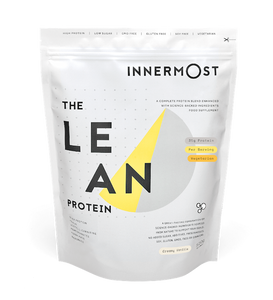
The Lean Protein
Whey protein powder for weight-loss.
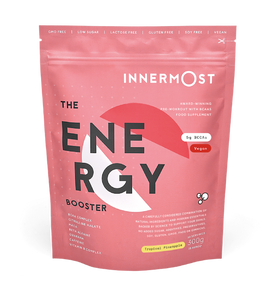
The Energy Booster
Pre/intra-workout powder with BCAAs.

What Are Hip Dips? And Why They Don’t Need To Be Fixed

22nd December 2020

22nd December 2020

By Shivraj Bassi

Ever looked in the mirror and suddenly noticed something about your body that had never occurred to you before? Us too. 

Hip dips, sometimes known as violin hips, are the gentle inward curves found just below your hips and above your thighs - and it’s the latest body part to be the target of online obsession. Google searches asking what hip dips are and how to get rid of them have soared in recent months, so if you’ve found yourself searching ‘how to get rid of hip dips’ after midnight, you’re definitely not alone. 

You may have read that hip dips are a cause for worry, can be changed through exercise or are bad. This is absolutely untrue. We’re here to give you the lowdown. 

What are hip dips?

Hip dips, or violin hips, are nothing more than a naturally occurring indentation that may exist between your thighs and your hips. Some people’s hips have them and some don’t - and it’s an inherent part of your skeleton and biology. 

Whether or not you’re blessed with hip dips depends on the shape of your hip bones. Some people’s body shape means that they have more visible hip dips than others. They’re a completely normal part of your body structure caused by the naturally inward-facing curves formed by the shape of your pelvis. They’re not created by being unhealthy, overweight or underweight - although having a higher level of body fat or muscle mass can make them more pronounced.

How to get rid of hip dip

The presence of hip dips is down to the shape of your bones, and they can’t be exercised or dieted away. While some people may find that they become smaller when they reduce body fat and increase muscle mass, there’s no guarantee that this will happen. Plus, if you focus too much on or avoid exercises that work your hip flexors and quads in favour of working on your glutes so as to avoid targeting the dips, you risk injuries from overworking certain body parts and neglecting others. 

More important is the mental impact of worrying about such things. Negative self-talk about body image and dissatisfaction with the way you look can affect your mental health and your self-image. The rhetoric that naturally occurring body parts look bad or should be exercised away is exceptionally negative - it’s like calling the fact that you have two arms a ‘problem area’. 

Hip dip exercises

A quick social media search reveals that thousands of people online are obsessed with the shape of their hips. Before and after photos, which are almost certainly airbrushed, abound, and there are plenty of videos and tutorials promising to get rid of hip dips for good. There’s even the extreme option of hip dip surgery. 

This narrative of supposed self-improvement and obsessively focusing on an impossible-to-change body part could lead to body dysmorphia or eating disorders. This could present as exercising obsessively, restricting food intake, binging and purging and being generally chronically unhappy with the way that you look. Focus on loving your body, staying healthy and strong and putting your energy into what you can change, rather than feeling negative about what you can’t. 

It’s a good idea to focus on strengthening your lower body as an entire entity, which will increase your power during workouts, help to stabilise your core and empower you in your everyday life. Incorporating exercises such as lunges, squats and glute bridges into your workout will help to kick your lower body into action and targets all of the muscles in your legs and hips, rather than trying to ineffectively spot-reduce one body part (which we all know never works how we want it to). Tools such as resistance bands and yoga mats will support you in this and make your workouts more effective. 


Hip dips are amazing!

Thankfully, there is another way to think about hip dips. There’s a growing movement of hip dip positivity online, rehabilitating the message around this maligned body part and disabusing the notion that there’s any such thing as an ideal body. Your focus should always be on health and balance rather than perfection. 

Instagram user @aubreyalyssa summed this attitude up in a post. ‘I've struggled with comparing myself to other women my entire life, and after starting my fitness journey it's no different,’ she said. ‘I will never have the "perfect" body according to society. But I'm learning to love the body I have! Big quads and hip dips! That's not going to change, so might as well embrace it.’

If you’re struggling with loving and accepting your body, Innermost recommends engaging in activities that bring you more in touch with your physicality such as yoga and meditation, and talking through your feelings with friends or a mental health professional. 

Need Expert Advice?

Other Insights

The Protein Mistake That's Holding Back Your Results
I've written at length about creatine. I've written about collagen, electrolytes, the GLP-1 moment, even the science of sleep. But I've never written a personal email about protein. That's a strange omission for someone who built a brand that makes some pretty ground-breaking protein powders. So let me explain why, and then actually say the thing I've been avoiding. Protein is the most foundational supplement in the Innermost range. It's also the hardest subject for me to write about personally, because there's nothing surprising about it. Creatine had a story. Collagen had a story. Protein is well... protein. Everyone knows you should eat more of it. The mechanism is not a secret. Muscle protein synthesis, leucine threshold, net nitrogen balance. If you've been in the fitness space for more than a couple of years, you've read this before. And I think that's the problem. The familiarity makes people stop paying attention. Here's what I actually think about protein, after a decade of working in this space. Most people in their thirties and forties are under-consuming protein and don't know it. Not by a small amount. The gap between what most people eat and what the research supports for muscle maintenance and body composition outcomes is significant. Studies looking at optimal intake for adults prioritising body composition consistently point to between 1.6 and 2.2 grams per kilogram of bodyweight per day. Most people are eating somewhere between 0.8 and 1.2. The difference is not cosmetic. Adequate protein intake directly affects your ability to preserve muscle tissue during a caloric deficit. It supports recovery between sessions. It has a measurable effect on satiety, which means it influences total caloric intake downstream, not just at the point you consume it. There's a subtler point too, and this is the one I've come to think matters most: protein is the nutrient where consistency compounds most directly. The benefits of creatine saturate over time in a relatively predictable way. Collagen has a timeline that research measures in months. But protein's effect on body composition is essentially continuous. Every day you hit your target, you preserve something. Every day you don't, you lose a small amount of ground. Over a summer, that adds up. This is what I've observed personally, and it's backed by the research on muscle protein turnover. The people who maintain their body composition through summer are not, in my experience, the people who train harder during that period. Most of them train less. Their routines are disrupted. They're travelling. Their eating is less structured. The people who come back in September looking broadly the same as they left in June are the ones who kept their protein intake consistent. That's it. That's the variable. Why I take The Lean Protein I’ve been taking The Lean Protein the past few months for a straightforward reason: the protein-to-calorie ratio. Much like our other protein blends, each serving delivers over 30 grams of protein. The calorie count is low relative to that protein yield. When my training is consistent and my eating is structured, I don't think about this very much. But in the periods when those things are less reliable, that ratio becomes the thing that holds the rest together. The formula also includes acetyl-L-carnitine, inulin, pomegranate extract, and yerba mate. These aren't afterthoughts. Acetyl-L-carnitine has a research base in fat metabolism. Inulin supports satiety and gut function. The pomegranate extract is included for its antioxidant contribution to recovery. This means that the formula does more work per serving than a standard whey and just what I need going into summer. The thing the industry gets wrong about protein Most protein marketing leads with taste and price per gram. Both matter. But neither tells you whether the formula will support body composition outcomes over time. The two questions I'd ask before buying any protein powder are: what is the actual protein-to-calorie ratio, and what is the leucine content per serving.  Leucine is the branched-chain amino acid most directly linked to triggering muscle protein synthesis, and there is a threshold dose, roughly 2.5 to 3 grams per serving, below which the anabolic response is blunted. Many protein powders do not disclose this. They just list total protein and move on. The Lean Protein does not have this problem. The formula is transparent. The dose is evidence-based. One thing I'd ask you to consider: if you've never actually checked whether you're hitting your protein targets, try tracking it for three days. Most people find the gap is larger than they expected. If you're not sure which Innermost product fits your specific goal, the quiz on our site is a good place to start. Find the right protein for your goal   Read more
I've Been Taking The Glow Blend For Six Months. Here's What Happened
There's an uncomfortable truth about founders who sell supplements: most of us are too invested in our own products to give you an honest account of what they actually do. I want to try something different with this email. I’ve been taking The Glow Blend every day for six months. What follows is a genuine account of what I expected, what I noticed, what I wasn't sure about, and what I didn't notice at all. I'm telling you this partly because I think you deserve that level of honesty from the person who formulated the product, and partly because the honest account is actually more useful than a testimonial. What the evidence says before I get into my own experience Collagen is the most abundant protein in your body. It gives skin its structure and elasticity. From your mid-twenties, your body produces less of it each year. By the time most people start thinking about skin supplementation, they've already lost a meaningful amount. Hydrolysed collagen peptides, which is what's in The Glow Blend, are different from the collagen your body produces. They're pre-broken into smaller chains, which makes them bioavailable in a way whole collagen protein is not. When you consume them, they circulate in the bloodstream, where studies suggest they signal fibroblasts to produce more collagen. The mechanism is real. The research is there. The timeline The strongest evidence on collagen supplementation shows meaningful changes in skin elasticity and hydration typically at 6-8 weeks minimum, with more substantial effects at 10-12 weeks and beyond. Studies on nail growth and hair strength follow a similar curve. This is not a two-week product. Anyone selling you collagen on a 30-day challenge framework has either not read the research or has chosen to ignore it. Vitamin C as a co-factorVitamin C is not optional in this equation. It's essential for collagen synthesis at a cellular level. Without adequate vitamin C, your body cannot complete the process of building new collagen fibres regardless of how much collagen you're consuming. This is why The Glow Blend includes it, and why most budget collagen products either leave it out or include a token dose that doesn't meet the threshold. The Glow Blend also contains hyaluronic acid, which is a glycosaminoglycan that attracts and holds water within the skin. Biotin (B7) supports keratin production, which is the structural protein in hair and nails. Folic acid (B9) plays a role in cell regeneration. Each of these is in the formulation for a specific, evidence-based reason.  What I noticed and what I didn't I started in December. Six months ago. I'll be honest: December is a difficult month to start an experiment. My diet was inconsistent, my sleep was disrupted, and my skin was already taking a beating from dry air and a bit too much running around. I didn't expect to notice much quickly, and I didn't. By week six, my skin felt more comfortable. Not dramatically different. More comfortable is the right word. Less tight in the morning. Less reactive to changes in temperature. I noticed it most on long-haul flights, where my skin used to feel genuinely awful after landing and increasingly didn't.By month three, I think that my nails were growing a little faster mainly because I was cutting them more often. Whether that's the biotin, the collagen peptides, or the combination, I can't tell you, and the research doesn't give a clean answer either. I keep my nails short anyway, so my nails weren't the thing I was watching most closely (or noticed for that matter). What I was watching was my hair. I'm older now than when I launched Innermost, and density is something I'm acutely aware of. The Glow Blend contains biotin and folate, both of which support hair health, so this is where my attention went. Over these six months: a bit thicker, a bit more resilient. I keep my hair short, so I'm not pointing to length. It's the feel and the density. I'm not going to dress that up into something it isn't. I'll just say it's been one of the more encouraging parts of the experience, and at this stage that counts for a lot.Skin texture improved. This one is harder to quantify because it's subjective. But my skin looks better now than it did in December. Some of that is the improvement in light. Some of it is that I'm trying to sleep better. But I've taken enough data points over six months to think the supplement is contributing something real. Where most products fall short The collagen category is full of underdosed products. The research on skin elasticity uses doses of 2.5g to 10g of collagen peptides per serving. A significant proportion of products on the market deliver less than 1g under the assumption that customers won't check. The Glow Blend delivers 5g of hydrolysed collagen peptides per sachet, alongside the vitamin C that makes the process work. That's where the formulation sits relative to the evidence. It's not arbitrary. My honest recommendation If you're thinking about trying The Glow Blend, I'd say this: give it twelve weeks before you draw any conclusions. The evidence doesn't support a shorter timeline and neither does my personal experience. Take it consistently. The days you forget are the days the benefit doesn't accumulate. Read more