








icon-account icon-glass

Popular Products

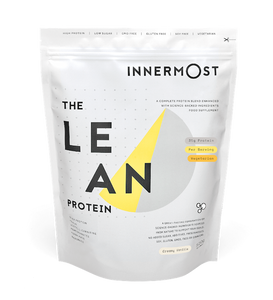
The Lean Protein
Whey protein powder for weight-loss.
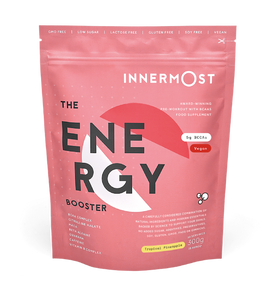
The Energy Booster
Pre/intra-workout powder with BCAAs.

The Top Fitness Hacks You Don't Want To Miss In 2025

21st September 2022

21st September 2022

By Shivraj Bassi

It's always important to make sure you're staying fit and healthy. If you set yourself some new years' resolutions this year that included getting yourself back to the gym, starting running again, or if your fitness game consists of 'I'll get back to it tomorrow...or the day after that' then, we hate to break it to you... but you may need our help.

Fear not. We're here to get you up to speed with our top fitness hacks of 2025, to keep you feeling great all year round. We've assembled these fitness hacks to get you back on your best game and to enable you to keep on keeping on. From fitness endurance, staying motivated, keeping up your nutrients and everything in between, we've got your back. So how can you keep fitness a top priority from January 1st all the way through to December 31st? Read on...

Find your squad

Staying fit and healthy is a whole lot easier with company, so if fitness sessions can become a time for socialising, you'll be far more likely to actually do them. Squats don't seem so bad when you can catch up with your mates at the same time.

Whether you rope in a friend or family member and plan a shared gym schedule, join a class, or find a new gym-buddy at your local gym, it's up to you. Trust us, though, you'll really see a shift in your motivation (and enjoyment) levels after adding a new recruit to your hype-team. 

Don't just take our word for it either. A study published in the Journal of Sport and Exercise Psychology revealed that social influence (ie, the presence or influence of friends and family members) had a hugely positive effect on the probability of an individual taking part in exercise (or any activities, actually).

Make it 'not' fitness

We'll admit it, you you can't escape the need to break a sweat. When it comes to exercise (well, effective exercise, that is) there's no getting around the fact that you're going to need to get up and shake that booty - Netflix can wait.

The good news, however, is that staying fit and healthy doesn't have to be a bore. You can combine fitness with something slightly more enjoyable so you've got something to look forward to, or go beyond the gym completely. How about a Saturday morning gym session followed by brunch, a weekday exercise class made sweeter by the promise of happy hour drinks afterwards - or a football game in the park with friends?

Have someone tell you what to do

You know that horrible feeling when you walk into the gym with no idea what you're supposed to do and feel like everyone is watching?

Guess what: you don't have to experience that if you don't want to!

Get rid of your worries by having a personal trainer tell you what to do, so you never have to feel like the new kid at school ever again. This also means that you're held accountable for turning up and that you'll get tailored advice specific to whatever you want to achieve, making sure you don't injure yourself by using the incorrect form. 

Win, win. Workout buddy, instruction and motivation all in one. Nice.

Find your motivation

We don't mean to get photo-ready here - it needs to get a bit deeper than that if you're going to find your real motivation.

Wondering how to stay motivated?

The key is to ask yourself what your motivation is. So you want to lose weight? Is it so you can get up the stairs without getting out of breath? Is it to feel more confident in those jeans?

Find your reason why and put a reminder of it somewhere you'll see every day. Try a sticky note on the mirror or a notification on your phone, if you're really struggling. Daily little reminders like that are key, and put a smile on your face, too. 

Get inspired

Use FOMO to your advantage by following your favourite fitness bloggers on social media. It's practically guaranteed that if your newsfeed is full of sweaty selfies you'll be feeling like you've got to get down to the gym asap.'

Research 'how to keep fit' articles, scour the wealth of information on Insight (hint hint), take note of exercises you see people doing in the gym, ask gym staff for help - inspiration is everywhere. You've just got to look for it. 

Keep yourself fuelled 

Finally, it's always important to keep your body in tip-top condition, and that can't be achieved by exercise alone. Think about what you're putting in your body, keep nourishing yourself through the implementation of a healthy, balanced diet, and don't forget to supplement. 

After all, if you're feeling like you could do with a little boost when it comes to smashing your workout (or just putting an extra spring in your step), The Energy Booster is always there to help (and cheer) you along the way. 

References

  • Carron, A. V., Hausenblas, H. A., & Mack, D. (1996). Social influence and exercise: A meta-analysis. Journal of Sport and Exercise Psychology, 18(1), 1-16. Click here. 

Product Spotlight

Need Expert Advice?

Other Insights

Halal Collagen Cover Image
Collagen has become a staple in many modern wellness routines, used to support everything from skin health to recovery and joint function. But as its popularity has grown, so too has the need for greater clarity around what’s in these products - and how they’re made. Case in point - halal collagen. Unlike other supplement ingredients, collagen is typically derived from animal sources. This makes its suitability under halal dietary guidelines less straightforward. Two collagen powders may look almost identical on the surface, yet differ significantly in how they are sourced, processed, and certified, meaning that one might be halal compliant and the other not so much. For anyone looking to incorporate collagen supplements into their routine, understanding these differences matters. This guide breaks down what exactly makes collagen halal and non halal, where confusion often comes in, and how to choose a supplement that aligns with both your values and your expectations for quality. What is halal collagen? Halal collagen refers to collagen that has been produced in accordance with Islamic dietary laws. While the term “halal” is often associated with food, the same principles apply to supplements, including collagen powders and capsules. In practice, this means that halal collagen must meet specific criteria across its entire lifecycle - not just in its final ingredient form. What makes collagen halal certified? Determining whether collagen is halal goes far beyond scanning an ingredient label. Collagen itself is most sourced from bovine (cow) or marine (fish) origins. Whether either is considered halal depends not only on the source, but on how it has been handled from extraction through to final production. Halal sourcing The sourcing of collagen is the first step to halal certification. Firstly, for a collagen product to be halal it must be sourced from a halal permissible animal such as cattle (bovine collagen) or fish (marine collagen). For bovine collagen, animals must be raised and slaughtered according to halal principles and Islamic rites collectively known as Zabiha. This includes: Invocation of Allah's name (Tasmiyyah) at the moment of slaughter. A swift cut to the throat to ensure humane treatment. Slaughtering conducted by a sane adult Muslim. The animal must also be healthy at the time of slaughter. Without the above considerations, collagen supplements cannot be considered permissible, regardless of quality. Halal processing Processing is the next critical factor in halal collagen certification. Collagen extraction often involves enzymes or chemical treatments to isolate and refine the protein. This hydrolysis process often uses enzymes to break down collagen into peptides. These enzymes must be plant-based (e.g., papain) or sourced from halal-certified animals; porcine-derived enzymes (like porcine trypsin) are forbidden. If any of these substances are derived from non-halal sources, the integrity of the product is compromised. Any solvents or processing aids used during extraction must also be free from ethanol or other non-halal alcohols. Halal collagen certification also ensures that no prohibited additives, such as non-halal gelatine carriers or animal-based anti-caking agents, were introduced during the manufacturing process. Halal Manufacturing Manufacturing standards are also highly important in making collagen supplements halal certified. Even when ingredients are halal, shared facilities or inadequate controls can introduce cross-contamination. As such, the manufacturing of halal collagen must follow the below guidelines: Non cross contamination: certified products are produced under strict conditions that ensure separation from non-halal substances throughout production, storage, and packaging. Complete surface cleaning: If a facility handles both Halal and non-Halal products, a rigorous, religiously supervised deep cleaning (often called Samak or Taharah) must occur between runs. Auditors must verify that no "Najis" (unclean/prohibited) residues remain. Common Misconceptions About Halal Collagen As collagen has become more widely used, a number of assumptions have emerged around its suitability within a halal diet. These are some of the most common. Collagen is Halal be default: because collagen is a natural protein, it’s easy to assume it meets dietary requirements. In reality, its origin and processing determine whether it is permissible. Marine collagen is always halal: While often suitable, this still depends on how the collagen is produced and whether non-halal substances are introduced during processing. Hydrolysed collagen is always halal: As with other forms of collagen, halal permissibility depends entirely on its source and production. There is also a tendency to equate “clean” or “natural” products with halal compliance. While these qualities can overlap, they are not the same. A supplement may be free from additives and still not meet halal standards. Benefits of halal collagen When halal collagen is produced with quality and integrity in mind, it can support a range of wellness goals. While we’ve spoken about these before, however below are some of the key benefits of halal collagen: It plays a role in maintaining skin structure and elasticity. Supports joint function and contributes to recovery following physical activity. They form part of a broader approach to looking, feeling, and performing at their best. These benefits are closely linked to how the collagen is sourced and formulated. Products that prioritise transparency, clean processing, and effective formats - such as hydrolysed collagen peptides - are more likely to deliver consistent results. For those seeking halal collagen supplements, this alignment between quality and compliance becomes key. How to choose a halal collagen supplement? Choosing a halal collagen powder or supplement should feel straightforward, but in practice it often requires a closer look. Below are some of the key things you should look for when purchasing halal collagen supplements: Certification is the most reliable starting point. A recognised halal certification confirms that the product has been assessed across sourcing, processing, and manufacturing. Clear information about where the collagen is sourced and how it is produced can indicate a more considered approach to formulation. The type of collagen also matters. Hydrolysed collagen peptides are widely used because they integrate easily into daily routines and are readily utilised by the body. The overall experience of the product. Taste, mixability, and ease of use all contribute to whether a supplement becomes part of a consistent routine - which is ultimately where results are seen. Is Innermost halal? In short, yes. Innermost products are halal certified, meaning they meet strict standards across sourcing, processing, and production. This ensures that every stage of development aligns with halal requirements. Innermost’s The Glow Blend contains high quality halal certified hydrolysed bovine collagen peptides and is formulated to support your skin and overall wellbeing, with extra nutrients like hyaluronic acid, vitamin C, biotin and folate. Alongside certification, our Innermost proteins and supplements focuses on clean, effective formulations designed to support real results. We prioritise ingredient quality, avoid unnecessary additives, and create products that fit seamlessly into everyday routines. If you’re looking for a collagen supplement that aligns with both your nutritional goals and your values, explore the Innermost range to find a halal-certified option that fits seamlessly into your routine. References Permadi, S., Ujilestari, T., Hakim, L et al. Characteristics and Applications of Collagen from the Animal By-Product as a Potential Source for Food Ingredients. Permadi et al. Reviews in Agricultural Science. 2024, 327-346. Click here. Aslan., H. The influence of halal awareness, halal certificate, subjective norms, perceived behavioral control, attitude and trust on purchase intention of culinary products among Muslim costumers in Turkey. International Journal of Gastronomy and Food Science. 2023. Click here. Schmidt, M. M. et al. Collagen extraction process. International Food Research Journal. 2016. Click here. Read more
The Ingredient We Almost Didn't Put In The Energy Booster
There's a question we ask about every ingredient before it goes into a product. Not "is this trending?" Not "does it look good on the label?" Just: does the evidence actually support putting this in? Most of the time, that question is straightforward. Either the research is there or it isn't. But occasionally you land on an ingredient where the science says yes and something else gives you pause. That's where formulation gets genuinely interesting. Beta alanine was one of those decisions. What Beta Alanine Actually Does Most people who've taken a pre-workout have felt beta alanine without knowing it. It's the ingredient responsible for the tingling sensation you get in your face, your neck, your hands. That feeling has a name: paraesthesia. It's harmless. But it's also the reason we nearly left beta alanine out. Before I get to that, the science. Beta alanine is a non-essential amino acid. On its own, it doesn't do very much. But inside muscle tissue, it binds with another amino acid called histidine to form something called carnosine. And carnosine is where the real work happens. During intense exercise, your muscles produce hydrogen ions as a byproduct of energy production. It's the build-up of those hydrogen ions, not lactic acid as most people think, that causes the burning sensation and the drop-off in performance. Carnosine acts as a buffer. It mops up those hydrogen ions and delays the point at which fatigue kicks in. The research on this is substantial. A 2012 meta-analysis published in the journal Amino Acids, covering over 40 studies, found that beta alanine supplementation consistently improved exercise capacity, particularly in high-intensity efforts lasting between one and four minutes. The effect size was meaningful and reproducible. This wasn't a promising pilot study. It was a decade of accumulated evidence pointing in the same direction. In practical terms: more reps before failure. More output before you hit the wall. Sustained performance over a longer window. So why the hesitation? The decision we almost got wrong The tingling. Not because it's dangerous. It isn't. The paraesthesia from beta alanine is a well-understood pharmacological response and there is no evidence of harm at the doses used in supplementation. But we had a real concern: if someone takes The Workout Blend for the first time and feels an unexpected tingling in their face, and nobody told them it was coming, we've just lost their trust. Possibly permanently. The easy path was to leave it out. Plenty of pre-workout formulas do exactly that, either because they're being cautious or because they want a smoother consumer experience. No ingredient, no explanation required. We talked about it a lot. And the conclusion we kept coming back to was this: removing an ingredient with strong evidence because it might confuse people is not how we want to make formulation decisions. That's the same logic that leads brands to include ingredients with weak evidence because they're more familiar, more comfortable, more sellable. The answer wasn't to remove it. The answer was to be upfront about it. The tingling means the beta alanine is working. It's a real physiological response to a real ingredient doing a real thing. If we believe in the science, we include the ingredient and we explain what's happening. That felt like the right standard to hold ourselves to. What the rest of the market does Most pre-workout formulas fall into one of two categories.The first is the stimulant-heavy formula. Stacked with caffeine at doses that produce a short spike, a noticeable crash, and not much else underneath. These sell well because the immediate sensation of energy feels like evidence that something is working. It often isn't, not in any meaningful physiological sense beyond what caffeine alone would do. The second is the proprietary blend. A long list of ingredients with no disclosed amounts, making it impossible to know whether any of them are present at doses that match the research. Proprietary blends let brands list an ingredient without committing to a dose that would actually work. Both approaches optimise for perception. Neither optimises for performance. What I'd recommend The Energy Booster (soon to be renamed to The Workout Blend) contains beta alanine alongside citrulline malate, which supports nitric oxide production and blood flow during training, BCAAs at a 2:1:1 ratio to safeguard lean muscle, and natural caffeine from guarana for sustained energy without the spike you get from synthetic sources. The formulation is built around what the research supports at doses that match the evidence. If you feel the tingling the first time you take it, that's the beta alanine. It's normal, it fades within 20 minutes or so, and it's a sign the formula is doing what it's supposed to do. Read more